The James Webb Space Telescope: A New Eye on the Cosmos
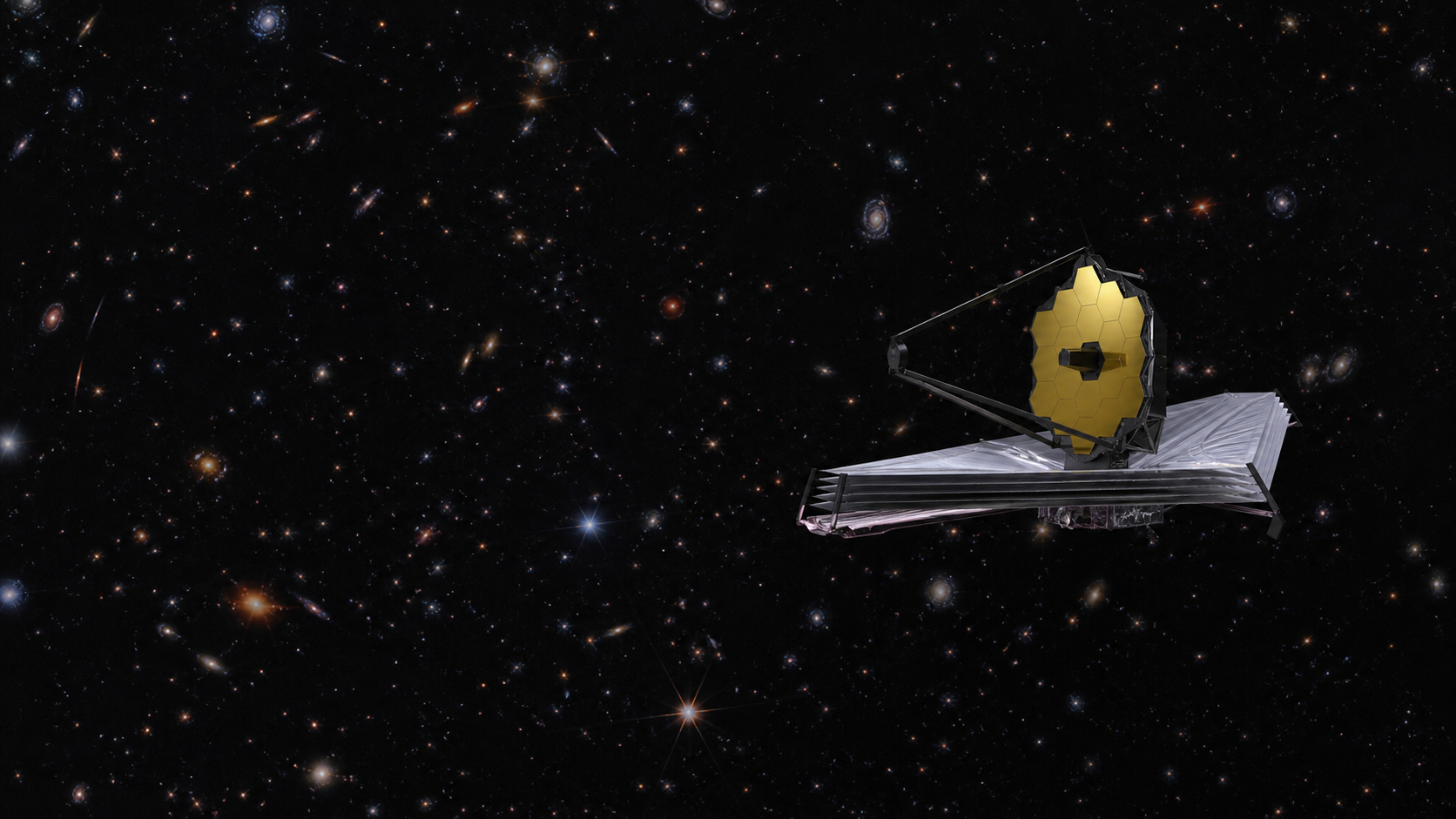
Launched on December 25, 2021, the James Webb Space Telescope (JWST) represents the most significant leap in space-based observation since the launch of Hubble in 1990. As a premier observatory for the next decade, Webb is designed to solve mysteries in our solar system, look beyond to distant worlds around other stars, and probe the mysterious structures and origins of our universe and our place in it.
Introduction to a New Era of Discovery
The James Webb Space Telescope is an international collaboration between NASA, the European Space Agency (ESA), and the Canadian Space Agency (CSA). Named after James E. Webb, who was the administrator of NASA during much of the Apollo era, this telescope is not just a replacement for Hubble, but a successor that opens up a whole new spectrum of discovery. While Hubble primarily sees the universe in visible and ultraviolet light, Webb is an infrared observatory. This shift in perspective is not merely a choice of technology but a fundamental requirement for seeing the most distant and oldest objects in the universe.
The development of Webb took over two decades and involved thousands of scientists and engineers from 14 countries. It is the most complex and expensive space telescope ever built, with a total cost of approximately $10 billion. The mission's success depended on the flawless deployment of several groundbreaking technologies, many of which had to be invented specifically for this mission.
Seeing Through the Dust: The Power of Infrared
One of the primary reasons for Webb's infrared optimization is the concept of cosmic redshift. Because the universe is expanding, the light from the first stars and galaxies is stretched as it travels through space. By the time it reaches us, what was once visible or ultraviolet light has been shifted into the infrared part of the spectrum. To see the "First Light" of the universe, we must be able to detect this faint infrared glow.
Furthermore, infrared light has the remarkable ability to pass through dense clouds of cosmic dust and gas. In visible light, regions like the famous "Pillars of Creation" appear as opaque, towering monoliths. In the infrared, Webb can peer through these curtains to witness the chaotic birth of stars nestled deep inside. This capability is essential for understanding the early stages of star formation and the processes that lead to the creation of planetary systems like our own.
Infrared observation also allows Webb to study the chemical composition of planet atmospheres in unprecedented detail. By analyzing the "fingerprints" left in the infrared light passing through a planet's atmosphere, scientists can identify molecules like water, carbon dioxide, and methane, which are critical for the search for life.
The Golden Eye: Engineering Excellence
The most striking feature of the JWST is its massive 6.5-meter primary mirror. This mirror is significantly larger than Hubble's 2.4-meter mirror, giving Webb about 6.25 times the collecting area. A larger mirror means the telescope can detect much fainter light, allowing it to see further back in time than ever before.
The mirror is composed of 18 hexagonal segments made of beryllium, a material chosen for its strength, lightness, and stability at cryogenic temperatures. Each segment is coated in a thin layer of 24-karat gold, which is highly reflective to infrared light. Because the mirror was too large to fit into any existing rocket, it was designed to be folded during launch and deployed in space—a complex "origami" procedure that had never been attempted on this scale.
Each mirror segment is equipped with actuators that allow for extremely precise adjustments. These actuators can move the mirrors in steps as small as 10 nanometers—about 1/10,000th the width of a human hair. This level of precision was necessary to ensure that the 18 segments act as a single, perfect optical surface.
The Shield Against the Sun
To detect faint infrared signals from the distant universe, the telescope itself must be kept extremely cold. If the telescope were warm, its own heat would drown out the signals it's trying to observe. To achieve this, Webb is equipped with a massive, five-layer sunshield the size of a tennis court. This shield protects the sensitive instruments from the heat of the Sun, Earth, and Moon.
The sunshield is made of a material called Kapton, coated with aluminum and doped silicon. Each layer is incredibly thin—the thinnest is only 0.025 mm. The layers are separated by a gap, allowing heat to radiate out into space. This design maintains a staggering temperature difference: while the sun-facing side can reach temperatures of 230°F (110°C), the instruments on the shaded side are kept at a frigid -370°F (below 50 Kelvin). This extreme cooling allows Webb to operate at the peak of its sensitivity.
Scientific Objectives and Discoveries
Webb has four main scientific goals that cover the entire history of the universe:
- The First Light: Webb is searching for the very first stars and galaxies formed after the Big Bang, over 13.5 billion years ago. These first luminous objects ended the "cosmic dark ages" and set the stage for the universe we see today.
- Assembly of Galaxies: By observing how galaxies change and grow over billions of years, Webb helps scientists understand the role of dark matter and the formation of supermassive black holes at the centers of galaxies.
- Birth of Stars and Protoplanetary Systems: Webb's ability to see through dust allows it to observe the formation of stars and the disks of gas and dust that eventually become planets.
- Planetary Systems and the Origin of Life: One of Webb's most exciting missions is the study of exoplanets. By analyzing the light passing through a planet's atmosphere (transit spectroscopy), Webb can identify the presence of water, carbon dioxide, methane, and other chemical signatures that might indicate the potential for life.
In its first year of operation, Webb has already made several groundbreaking discoveries. It has detected the most distant galaxy ever observed, GLASS-z13, which existed just 300 million years after the Big Bang. It has also provided the first clear evidence of carbon dioxide in the atmosphere of a planet outside our solar system (WASP-39b).
Orbiting at the Second Lagrange Point (L2)
Unlike Hubble, which orbits the Earth every 95 minutes, Webb is located 1.5 million kilometers (1 million miles) away at the second Lagrange point (L2). This specific point in space allows the telescope to stay in line with the Earth as it orbits the Sun.
The L2 point provides a stable gravitational environment where the telescope can maintain a constant orientation relative to the Sun and Earth. This is essential for the sunshield to effectively block the heat and light from these bodies. Being far away from the Earth's heat also helps keep the telescope at its required cryogenic temperatures.
The Near-Infrared Camera (NIRCam) and MIRI
Webb carries four main scientific instruments. The NIRCam is the primary imager, covering the 0.6 to 5-micron wavelength range. It is used to detect light from the earliest stars and galaxies. The Mid-Infrared Instrument (MIRI) covers the 5 to 28-micron range, allowing Webb to see cooler objects like debris disks around stars and the glow of complex organic molecules in interstellar space.
MIRI requires even lower temperatures than the other instruments—below 7 Kelvin. To achieve this, it is equipped with a specialized "cryocooler" that acts like a high-tech refrigerator, pumping helium gas to remove heat from the instrument.
The Legacy and Future of Webb
The James Webb Space Telescope is more than just a piece of hardware; it is a testament to human curiosity and international cooperation. Since its first images were released in July 2022, it has already rewritten textbooks, providing unprecedented views of our own solar system, including Jupiter's faint rings and Neptune's delicate atmosphere.
The mission is planned to last at least five years, but the precise launch and orbital maneuvers were so efficient that Webb has enough fuel to continue its observations for over 20 years. As it continues its mission, Webb will undoubtedly uncover even more surprises, further expanding our understanding of the vast, beautiful, and mysterious cosmos. It represents the pinnacle of our current technological ability and the beginning of a new golden age of astronomy.
Sources & Further Reading
- NASA Webb Telescope Official Site: webb.nasa.gov
- ESA Webb Information: esa.int
- STScI Webb Mission Center: stsci.edu
- NASA's First Images Gallery: nasa.gov/webbfirstimages
- Gardner, J. P., et al. (2006). The James Webb Space Telescope. Space Science Reviews.