The Mars Exploration Program: Searching for Signs of Past Life
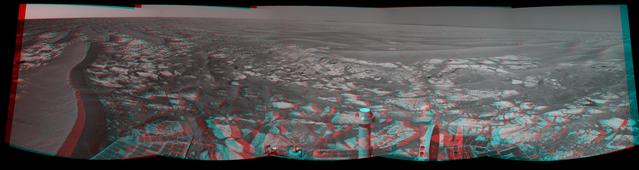
Mars has long captured the human imagination. Once a world of flowing rivers and potentially habitable environments, it is now a frozen desert. Understanding what happened to Mars is key to understanding the future of our own planet.
The Allure of the Red Planet
Mars is the most Earth-like planet in our solar system. It has seasons, polar ice caps, volcanoes, canyons, and a day that is just slightly longer than 24 hours. However, its atmosphere is thin and composed mostly of carbon dioxide, and its surface is bombarded by radiation. Despite these challenges, Mars is the primary target for our search for life beyond Earth.
Follow the Water
For decades, NASA's strategy for Mars exploration has been to "follow the water." Life as we know it requires water, and evidence from orbiters and rovers has confirmed that Mars once had abundant liquid water on its surface. Ancient riverbeds, lake basins, and minerals that only form in water, like hematite and clays, tell a story of a warmer, wetter past.
Missions like Spirit and Opportunity (2004) were "robotic geologists" that proved liquid water once flowed on the surface. The Curiosity rover, which landed in Gale Crater in 2012, went a step further by identifying all the chemical ingredients necessary for life and confirming that the crater was once a habitable lake environment for millions of years.
So what changed? Scientists believe the answer lies in Mars's magnetic field. Roughly four billion years ago, the planet's inner dynamo shut down, and without a protective magnetosphere, the solar wind gradually stripped away the atmosphere. As the air thinned, the surface pressure dropped until liquid water could no longer remain stable, and the planet froze into the cold desert we see today.
Perseverance: Seeking Biosignatures
The latest chapter in Mars exploration began with the landing of the Perseverance rover in Jezero Crater in February 2021. Jezero was chosen because it contains a well-preserved ancient river delta, a place where life might have thrived and left behind traces.
Perseverance is equipped with sophisticated instruments to search for biosignatures—fossilized remains of ancient microbial life. It is also collecting rock and soil samples that will be returned to Earth by a future mission (Mars Sample Return), allowing scientists to study them with the most powerful laboratories on our planet.
The rover also carried a groundbreaking technology experiment called MOXIE (Mars Oxygen In-Situ Resource Utilization Experiment). Roughly the size of a car battery, MOXIE used electrolysis to split carbon dioxide from the Martian atmosphere into oxygen and carbon monoxide. Across multiple runs it reliably produced breathable oxygen, demonstrating for the first time that future crews could manufacture key resources on Mars rather than carrying everything from Earth.
Ingenuity: A New Dimension
Accompanying Perseverance was Ingenuity, a small helicopter that achieved the first powered, controlled flight on another planet. Although originally intended as a technology demonstration, Ingenuity exceeded all expectations, flying dozens of times and acting as a scout for the rover. Its success has opened up a new era of aerial exploration on other worlds.
The Mystery of Methane
One of the most intriguing discoveries on Mars is the detection of methane in the atmosphere. On Earth, most methane is produced by biological processes. Methane on Mars has been detected by telescopes on Earth, by the Mars Express orbiter, and by the Curiosity rover. However, the levels are low and appear to fluctuate seasonally. Whether this methane is produced by geology or biology remains one of the great unanswered questions of Mars science.
The Future: Human Exploration
The ultimate goal of the Mars Exploration Program is to prepare for human missions. NASA's Artemis program aims to return humans to the Moon to test the technologies and systems needed for a journey to Mars. Challenges include long-duration space travel, protecting crews from radiation, and learning to live off the land (In-Situ Resource Utilization, or ISRU) by producing oxygen and fuel from the Martian atmosphere and soil.
Mars exploration is no longer the effort of a single nation. In 2021 alone, three missions from three different countries arrived at the Red Planet: NASA's Perseverance rover, China's Tianwen-1 orbiter with the Zhurong rover, and the United Arab Emirates' Hope orbiter, which studies the Martian atmosphere and its weather. This growing international fleet ensures that the next decades of Mars science will be more global, and more ambitious, than ever before.
Conclusion
Our exploration of Mars is a journey to understand our place in the solar system. Was Mars once a second Earth? Does life exist there today, perhaps deep underground? By answering these questions, we learn more about the resilience of life and the conditions that make a planet habitable. Mars remains the frontier of human exploration, a red beacon calling us to look beyond our own horizon.
Sources & Further Reading
- NASA Mars Exploration Program: mars.nasa.gov
- Jet Propulsion Laboratory (JPL): jpl.nasa.gov
- ESA ExoMars Mission: esa.int
- National Geographic: Mars: nationalgeographic.com