The Future of Space Colonization: Moon, Mars, and Beyond
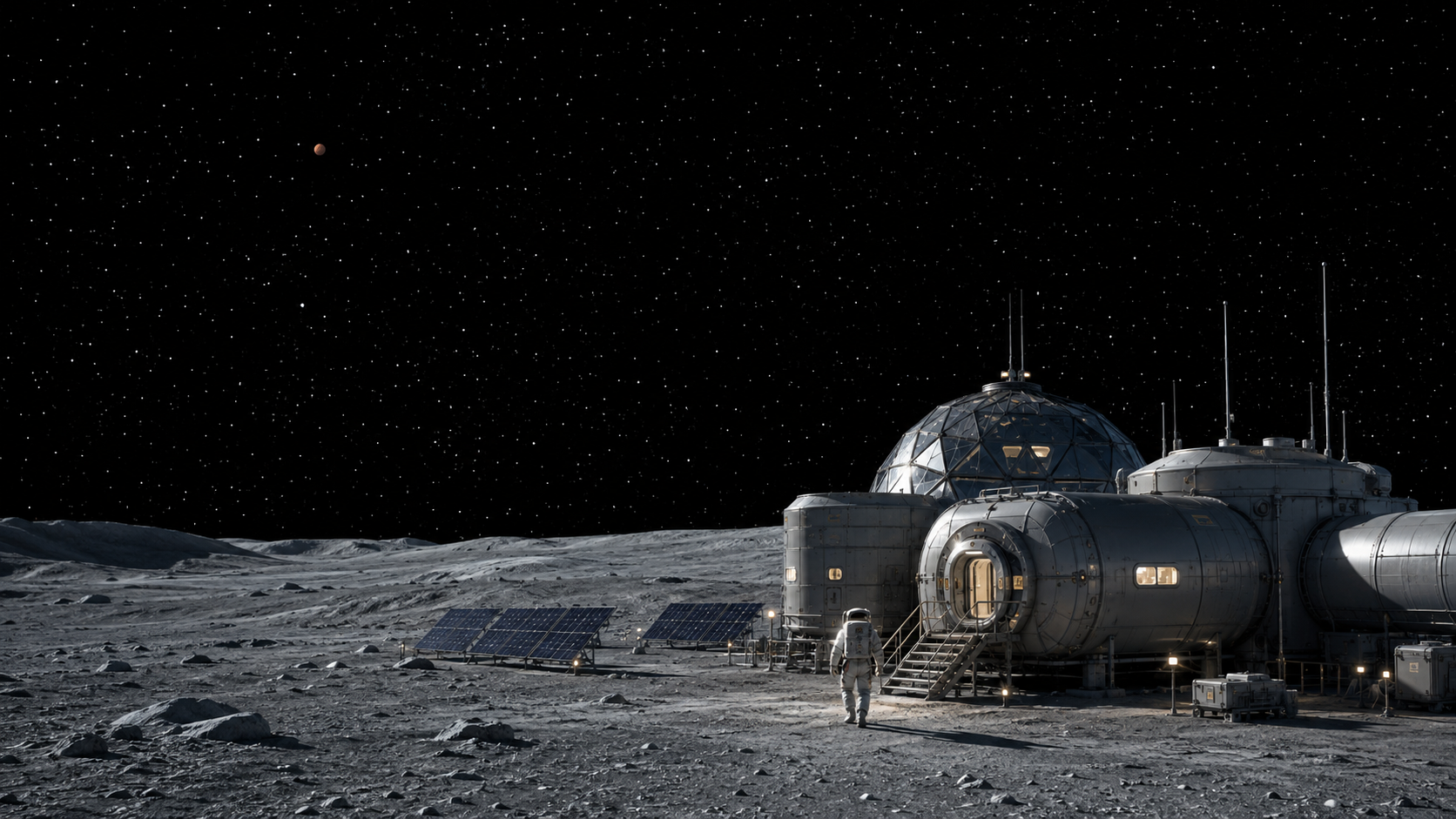
Humanity is on the verge of becoming a multi-planetary species. From permanent bases on the Moon to the first footprints on Mars, the next few decades will define our future in the stars. But space colonization is more than just a grand adventure; it is a challenge of survival, technology, and ethics.
The Moon: Our First Outpost
The Moon is the logical first step for space colonization. Only three days away from Earth, it serves as a testing ground for the technologies needed to live on other worlds. NASA's Artemis program aims to establish a sustainable human presence on the Moon by the end of the 2020s, including the first woman and the first person of color to walk on the lunar surface.
The lunar south pole is of particular interest because of the presence of water ice in permanently shadowed craters. This ice can be harvested and split into hydrogen and oxygen to create rocket fuel and breathable air, a process known as In-Situ Resource Utilization (ISRU). A permanent lunar base, like the planned Gateway station, will serve as a jumping-off point for missions to Mars.
Mars: The Second Home
Mars is the primary goal for long-term colonization. While much farther away than the Moon—a journey of six to nine months—it has a thin atmosphere, abundant water ice, and a day/night cycle similar to Earth's. Companies like SpaceX are developing the Starship launch system specifically to transport large numbers of people and cargo to Mars.
Living on Mars will be incredibly difficult. Settlers will have to deal with low gravity (38% of Earth's), extreme cold, and high levels of radiation. Initial colonies will likely be built underground or in lava tubes to protect inhabitants from these threats. Over time, some scientists suggest terraforming—altering the Martian environment to make it more Earth-like—though this process would take centuries and involves significant ethical and technical debates.
One possible answer to the gravity problem is rotation. Engineers have long studied rotating habitats that spin to generate artificial gravity through centripetal force, a concept popularized by physicists such as Wernher von Braun and later explored in NASA design studies. Whether future Mars settlers adapt naturally to partial gravity over generations, or whether large rotating settlements become the preferred long-term home for humanity in space, remains one of the most important open questions in space medicine.
Beyond Mars: Asteroids and Outer Moons
The colonization of space won't stop at Mars. Asteroid mining could provide a nearly limitless supply of precious metals and resources for building space infrastructure. Farther out, the icy moons of Jupiter and Saturn, such as Europa and Enceladus, are of great interest. These moons harbor subsurface oceans that might already host life, and they could serve as outposts for the exploration of the outer solar system.
Challenges of Living in Space
The technical and biological challenges of space colonization are immense:
- Health: Long-term exposure to low gravity causes muscle atrophy and bone density loss. Radiation in deep space increases the risk of cancer and other illnesses.
- Life Support: Creating a closed-loop system that recycles 100% of air, water, and waste is essential for survival far from Earth.
- Psychology: Living in isolated, cramped environments millions of miles from home will take a significant toll on the mental health of colonists.
- Ethics: Who owns space? How do we prevent the militarization of other worlds? Do we have the right to alter the environments of other planets?
Importantly, we have already taken the first steps. The International Space Station has been continuously inhabited since November 2000, demonstrating that humans can live and work in space for months at a time. Over more than two decades, astronauts aboard the station have learned to grow crops in orbit, recycle most of their water, and conduct cutting-edge research on how the human body responds to weightlessness. China's Tiangong space station and upcoming commercial stations in low Earth orbit will extend this experience even further, turning near-Earth space into a permanent human habitat.
Why Colonize Space?
There are several compelling reasons to become a multi-planetary species. Survival is one: as long as humanity is confined to a single planet, we are vulnerable to global catastrophes like asteroid impacts or climate collapse. Science is another: living on other worlds will provide unprecedented opportunities for discovery. Finally, Inspiration: space exploration represents the peak of human achievement and curiosity, pushing us to transcend our limits.
Conclusion
Space colonization is no longer the stuff of science fiction; it is an active area of development and planning. The challenges are daunting, but the potential rewards are infinite. As we take our first steps back to the Moon and eventually to Mars, we are not just exploring the stars—we are ensuring the long-term survival and prosperity of the human race. The cosmos is our next frontier, and our journey has only just begun.
Sources & Further Reading
- NASA Artemis Program: nasa.gov/artemis
- SpaceX Starship: spacex.com
- The Planetary Society: Space Settlements: planetary.org
- Zubrin, R. (1996). The Case for Mars: The Plan to Settle the Red Planet and Why We Must.