What Altitude Tells You About Satellite Speed and Period
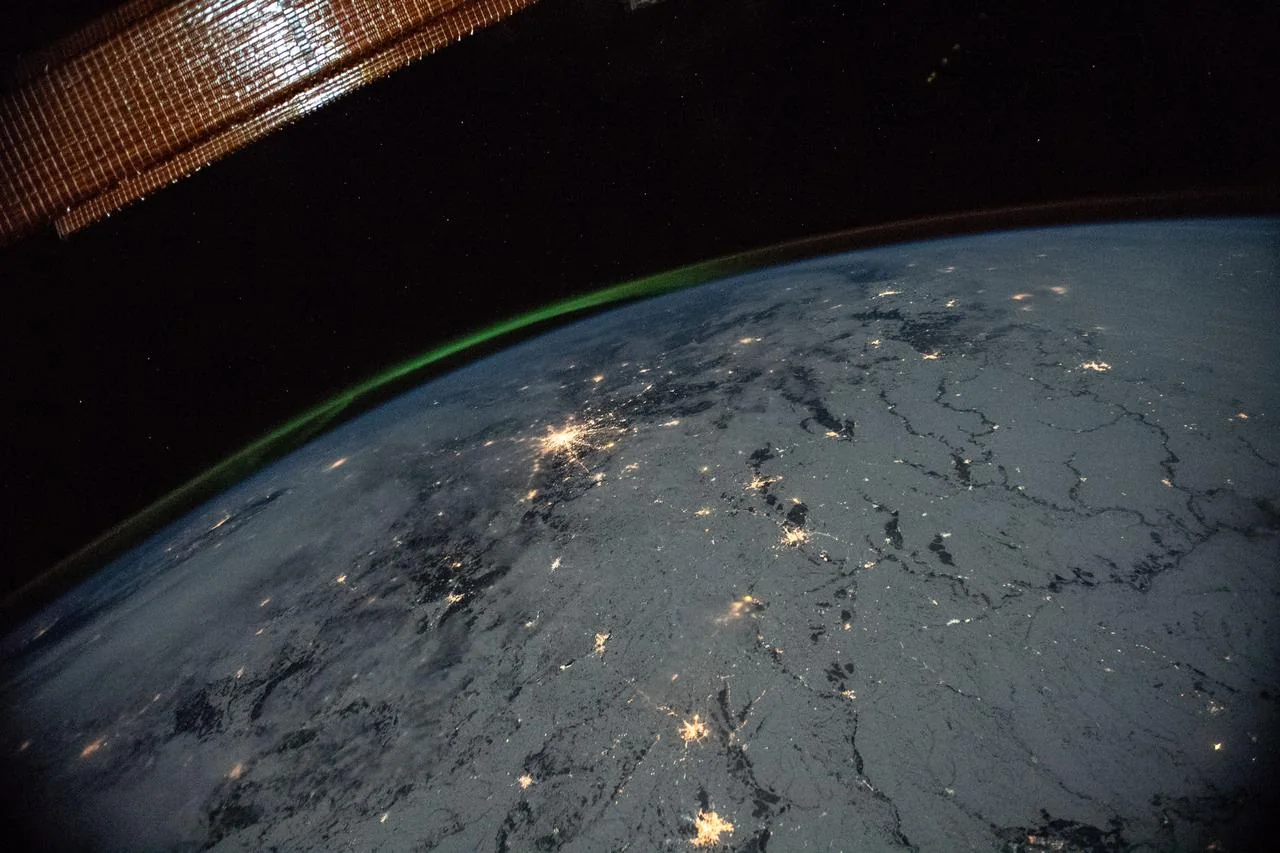
A satellite can complete an orbit while a ground observer is still working through an evening observing session. The short period can seem surprising until you separate altitude from distance to Earth's centre. A basic circular orbit model explains both speed and period with a few quantities. It also shows why knowing those two results is insufficient to predict where a satellite will appear in your sky.
Begin at the centre of Earth
The Satellite Orbit Period & Speed Calculator asks for altitude above a mean spherical Earth. Its orbital radius is that altitude plus 6371.0084 kilometres. At an illustrative height of 400 kilometres, the radius is therefore 6771.0084 kilometres. Entering 400 directly as the radius in a separate formula would place the orbit inside Earth and produce an entirely different answer.
The model also uses Earth's gravitational parameter, approximately 398600.435507 cubic kilometres per square second. This quantity combines the gravitational constant and Earth's mass. Keeping radius in kilometres makes the speed calculation return kilometres per second. Mixing a radius in metres with that parameter introduces a unit error, even though a calculator will still display a number.
Calculate the speed of circular free fall
In a circular two body orbit, gravity supplies the acceleration needed to curve the path. Equating gravitational acceleration with circular motion gives speed as the square root of gravitational parameter divided by radius. The 400 kilometre example yields approximately 7.673 kilometres per second. This is an ideal orbital speed relative to an Earth centred inertial frame.
The satellite is continually falling, but its sideways motion carries it around the planet instead of directly to the ground. It does not need an engine firing throughout every orbit to maintain the ideal path. Real spacecraft use propulsion for purposes such as deployment, manoeuvres, and replacing energy lost to drag, which the simple circular calculation does not include.
Turn speed into a period
The circumference is two times pi times orbital radius. Divide that distance by speed to obtain the time for one revolution. At 400 kilometres altitude, the result is roughly 92.41 minutes. This calculation describes a full circuit in the ideal model; it is not the duration for which a satellite remains visible above one observer's horizon.
Try a second height of 800 kilometres. The tool returns a lower circular speed and a longer period. The satellite travels a larger circumference and moves more slowly along it. This is a useful consistency check: when you increase the altitude of a circular orbit around the same primary body, the period should increase, not decrease. Keep both heights in your notes to compare the direction of change.
Understand the escape speed comparison
At the same radius, the ideal escape speed is the circular speed multiplied by the square root of two. This follows from the energy needed to reach indefinitely large distance with no remaining speed in an isolated two body system. It is not the amount of extra engine speed a spacecraft necessarily needs from every starting condition.
A launch from Earth's rotating surface involves atmosphere, gravity losses, vehicle trajectory, and propulsion limits. An escape manoeuvre from an existing orbit has its own starting energy. Use the Escape Velocity Calculator to study the ideal energy relationship, but do not treat either page as a launch performance estimator or an operational flight plan.
Recognise what a circular approximation omits
An elliptical orbit does not have one constant speed. Motion is faster near its closest approach and slower farther away. Its period depends on the semimajor axis, while a speed calculation also needs the spacecraft's position along the ellipse. Replacing that geometry with one chosen altitude removes information; the resulting circular estimate cannot reproduce the complete elliptical trajectory.
Earth is also not perfectly spherical. Its uneven gravity field changes orbital orientation, and atmospheric drag can alter low orbits. Solar activity affects the upper atmosphere, so drag is not a fixed correction that can be added once for every satellite. The calculator's minimum input height is a numerical boundary, not a promise that an orbit at that height would remain stable.
Keep period separate from pass predictions
Earth turns underneath the orbital plane. Consequently, a revolution lasting about ninety minutes does not mean the spacecraft repeats the same ground track ninety minutes later. A useful classroom exercise is to compare one orbital period with Earth's rotation over that interval. Keep this qualitative geometry separate from a precise map: inclination, perturbations, and the chosen reference frame still control the real track.
To predict a visible pass, you need an orbit's orientation and phase at a known epoch, a propagation model, the observer's location, and viewing conditions. Sunlight on the spacecraft and darkness at the observing site affect visibility. None of those can be inferred uniquely from altitude. Two objects at the same height can cross completely different parts of the sky.
This tool therefore makes no live tracking request and displays no current spacecraft position. Its useful job is to explain scale: how altitude changes ideal speed and period, how to keep units consistent, and where a more detailed orbital model becomes necessary. Save the inputs with the copied results so the estimate remains understandable later.
Related reading
 Future
The Future of Space Colonization: Moon, Mars, and Beyond
From lunar bases and Artemis to Mars settlements and beyond: the technologies, challenges, and ethics of becoming a multi-planetary species.
 Physics
The Big Bang Theory: The Origins of Everything
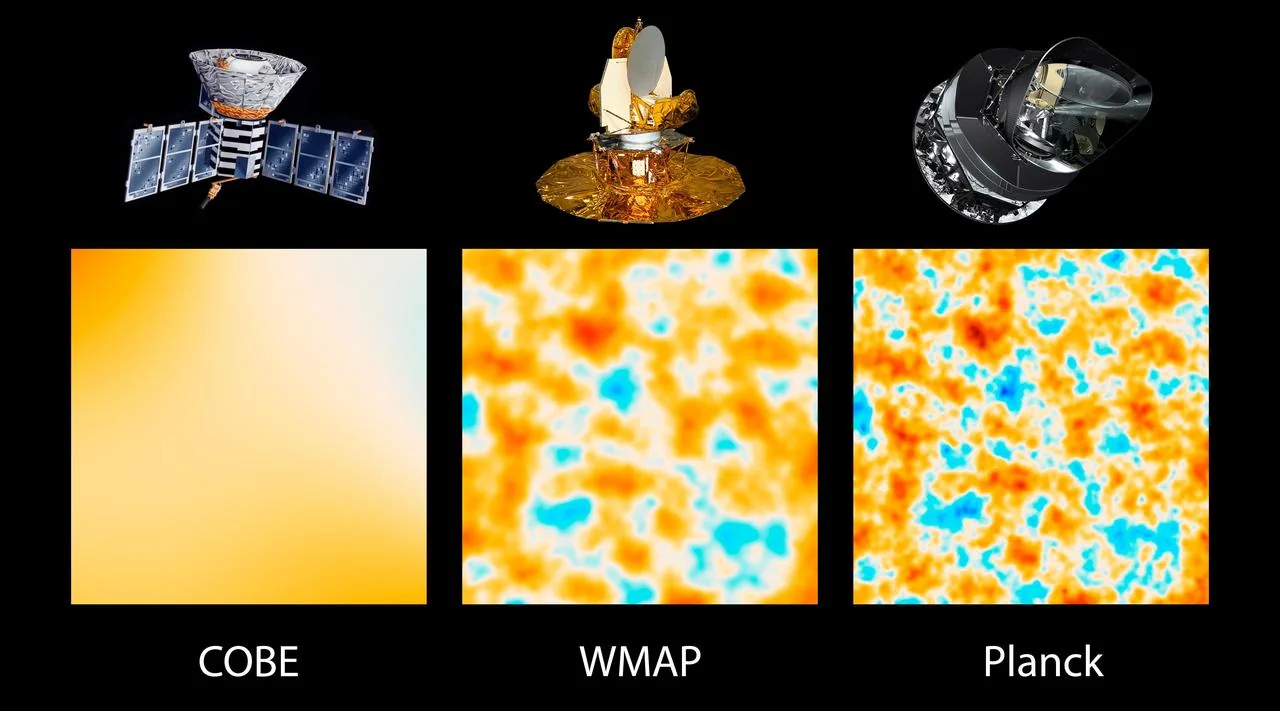
How did the universe begin? Explore the evidence for the Big Bang theory, from Hubble's expanding universe to the Cosmic Microwave Background radiation.